


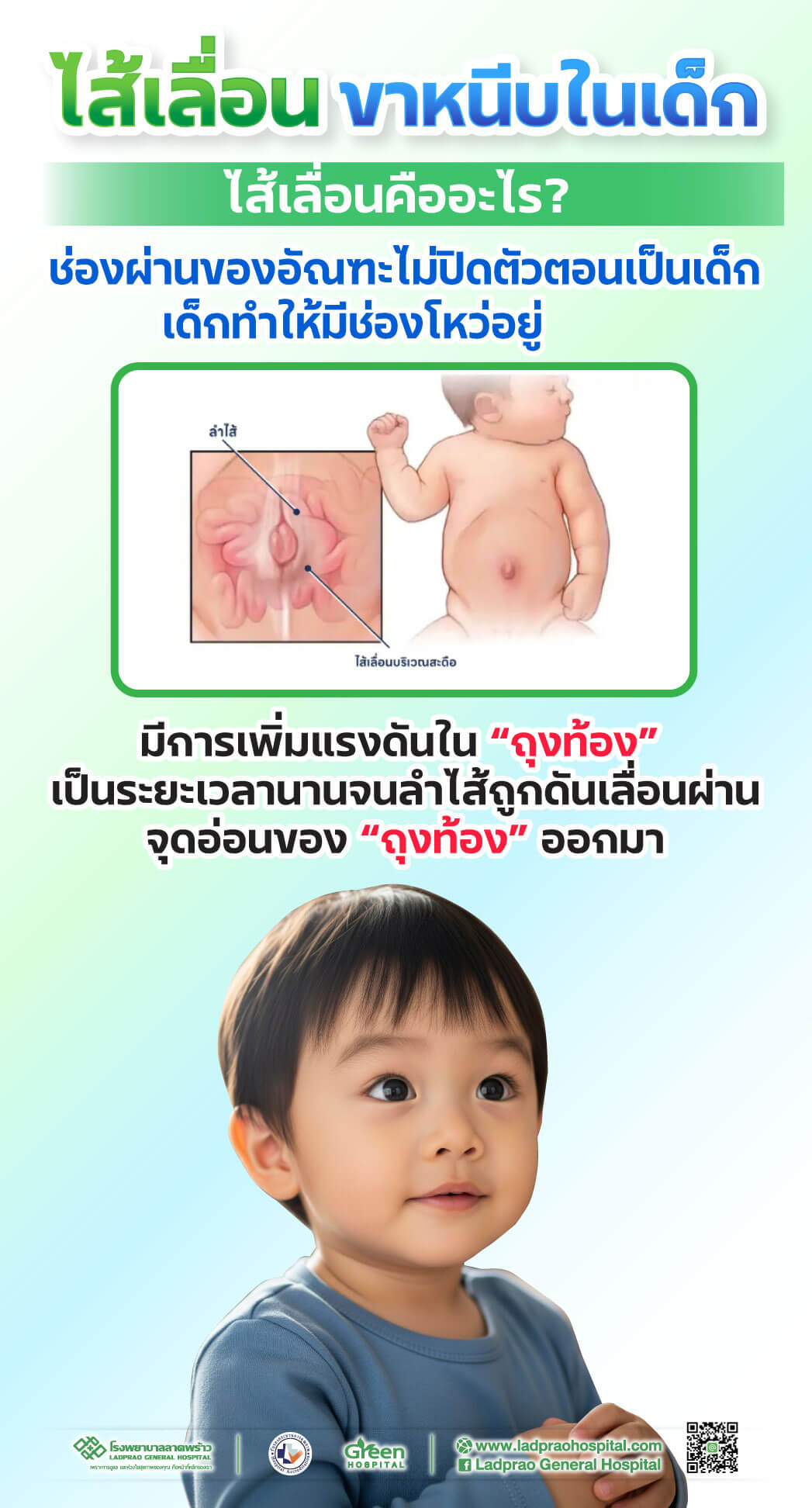
» Inguinal hernia
- This medical condition is known as inguinal hernia. It is a common condition in children, particularly in boys, where a part of the intestine or an organ from the abdomen pushes through a weak spot in the muscles of the groin, causing a noticeable lump.
» Cause.
- A canal called the inguinal canal connects the abdomen to the scrotum (in boys) or the groin (in girls). This channel typically closes on its own shortly before or after birth. However, in some children, the channel may not close completely, leaving a gap through which the intestines or other internal organs can descend.
- Risk factors that may cause pediatric hernias include...
- Premature birth or low birth weight.
- Male gender, as they are at a higher risk than females.
- A family history of hernias.
» Observable symptoms
- Parents can observe their child's symptoms as follows.
- Bulge in the groin area: This lump may appear when a child coughs, sneezes, cries, or strains to have a bowel movement, and will disappear when the child is resting or in a normal position.
- Infants may become irritable: they cry more than usual or feed less.
- Swelling may occur in the scrotum in male children.
» Complications and Dangers
- While a reducible hernia isn't immediately dangerous, leaving it untreated can lead to serious complications. This is especially true if the protruding intestine gets trapped, a condition known as an incarcerated hernia. This cuts off blood flow to that part of the bowel, which can lead to tissue death (strangulation) and become a life-threatening emergency.
» Signs of an incarcerated hernia that require immediate medical attention.
- An elevated lump that doesn't disappear, even with gentle pressure or when the child is resting.
- A bulge that is dark red or purple.
- The child is crying in severe pain.
- Has accompanying nausea, vomiting, or fever.
- Unable to pass stool or gas.
For more information, please contact the Pediatric Center, Building 2, 2nd Floor, Tel. 0 2530 2556 ext. 2200, 2201.